
Why Is PAXG Price Different From Gold? 5 Reasons Crypto Traders Should Know

 Prefer us on Google


TL;DR
- Why is PAXG cheaper or more expensive than gold? The answer comes down to five factors: liquidity, funding rates, futures basis, weekend trading, and market demand.
- Although PAXG and XAUT are backed by physical gold, their prices don't always perfectly match spot gold (XAU/USD).
- Understanding these pricing gaps can help traders avoid hidden costs and identify better entry opportunities.
- Learn how PAXG, XAUT, funding rates, and futures premiums interact — and how experienced traders use them to their advantage.
- WEEX offers both PAXG-USDT and XAUT-USDT perpetual futures for traders looking to access gold markets 24/7.
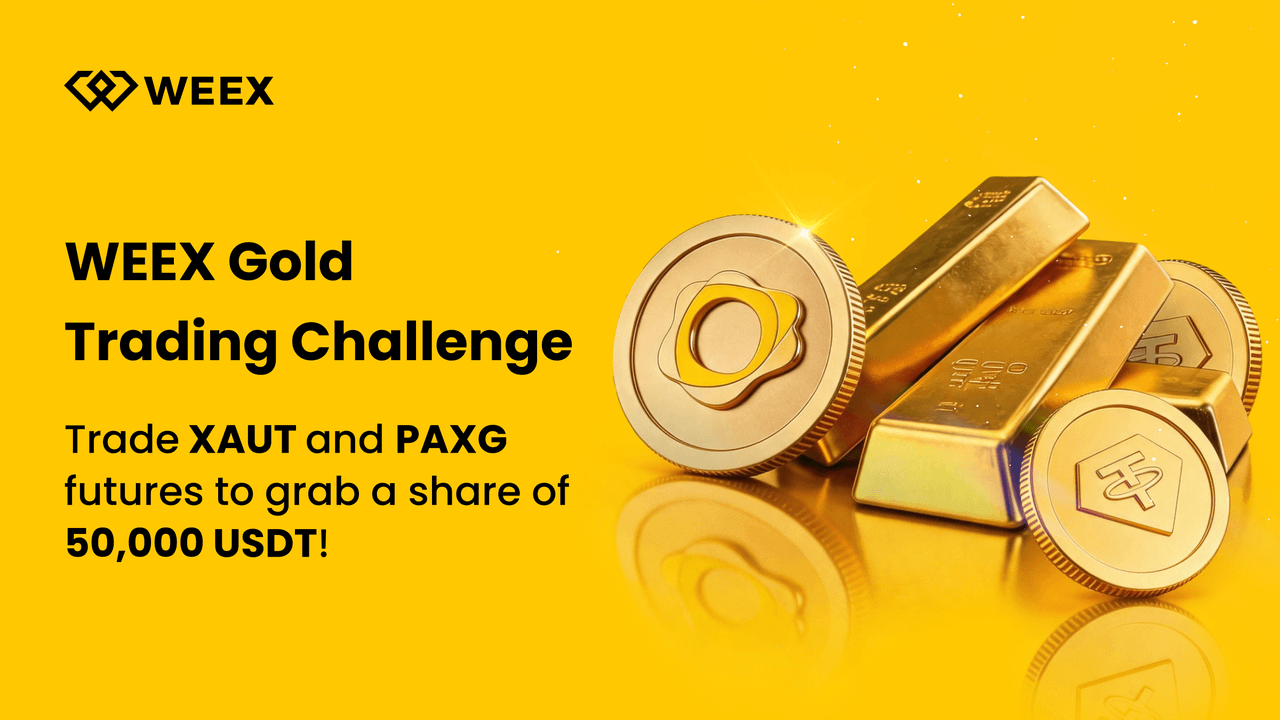
Why Is PAXG Price Different From Gold?
What Is the Gold Spot Price (XAU/USD)?
- PAXG: You need at least 430 troy ounces (~$1.4 million at current gold prices) to redeem for physical LBMA bars from Paxos
- XAUT: Tether Gold requires a minimum of 50 ounces for direct issuance/redemption
5 Reasons PAXG and XAUT Trade Above or Below Gold
1. Exchange Liquidity Can Push PAXG Away From Spot Gold
2. Funding Rates Can Make Gold Futures More Expensive
3. Futures Premiums and Discounts (Basis)
- Contango: Common during gold bull runs. Futures premium over spot can reach 0.5–1% during strong uptrends.
- Backwardation: Rare, but seen briefly during the February 2025 London bullion shortage, when physical delivery times stretched and spot demand spiked.
4. PAXG Trades 24/7 While Gold Markets Do Not
5. PAXG vs. XAUT: Which Tracks Gold More Closely?
| Factor | PAXG | XAUT |
| Issuer | Paxos Trust Company (NYDFS-regulated) | TG Commodities (Tether subsidiary) |
| Custody | Brink's vaults, London (LBMA) | Swiss vaults (MKS PAMP, Loomis) |
| Monthly audits | KPMG (since Feb 2025) | BDO Italia |
| Networks | Ethereum only | Ethereum, Tron, Solana, BNB Chain |
| CEX liquidity | Moderate | Higher (Tether distribution network) |
| Typical gap vs. XAU | Slightly tighter (institutional arbitrageurs) | Can widen more during stress |
PAXG vs XAUT: Which Tokenized Gold Asset Is Better?
How Traders Can Profit From PAXG and XAUT Price Gaps
- Buy spot XAUT
- Short XAUT futures
Before Trading PAXG or XAUT Futures: 4 Things to Check
- Check the funding rate. Is it positive (longs pay)? Factor that cost into your expected P&L. A 12.4% annualized funding rate costs about 1% per month on a long position.
- Check the basis. Is the futures price trading above or below spot XAUT/PAXG? A large premium means you're buying expensive exposure. A discount might mean the market is nervous about something.
- Check the time. Weekend hours mean wider spreads and staler index prices. Avoid large market orders Friday evening through Sunday night unless you have a specific weekend news thesis.
- Cross-reference XAU/USD. Tools like TradingView's XAU/USD chart let you compare your PAXG/XAUT trade against the actual gold price. If the gap looks unusually large, that's either an opportunity or a warning signal.
Trade PAXG and XAUT Futures on WEEX
- New users: Deposit ≥ 100 USDT + complete a first spot trade in XAUT or PAXG ≥ 50 USDT → receive a 7-day +10% yield coupon and 10 USDT trial fund
- Active traders: Complete ≥ 10,000 USDT in XAUT or PAXG futures volume → share from a 50,000 USDT trial funds pool (first-come-first-served)
- The more volume you trade, the larger your share of the reward pool
Quick Reference: Why Is My PAXG/XAUT Price Different from Gold?
| Situation | Why It Happens |
| PAXG trades above gold | Strong buying demand on crypto exchanges |
| PAXG trades below gold | Temporary selling pressure or low liquidity |
| XAUT futures trade above spot | Positive basis and strong bullish sentiment |
| XAUT futures trade below spot | Risk-off sentiment or short-term demand for spot exposure |
| Weekend price differences | Gold markets are closed while tokenized gold trades 24/7 |
| Long futures position loses value | Funding payments reduce returns over time |
FAQ
Why is PAXG cheaper than gold?
Why is XAUT more expensive than gold?
Does PAXG always track gold?
Is PAXG backed by real gold?
Is PAXG safer than XAUT?
Why do PAXG futures and spot prices differ?
About WEEX
Founded in 2018, WEEX has developed into a global crypto exchange with over 6.2 million users across more than 150 countries. The platform emphasizes security, liquidity, and usability, providing over 1,200 spot trading pairs and offering up to 400x leverage in crypto futures trading. In addition to the traditional spot and derivatives markets, WEEX is expanding rapidly in the AI era delivering real time AI news, empowering users with AI trading tools, and exploring innovative trade to earn models that make intelligent trading more accessible to everyone. Its 1,000 BTC Protection Fund further strengthens asset safety and transparency, while features such as copy trading and advanced trading tools allow users to follow professional traders and experience a more efficient, intelligent trading journey.
Follow WEEX on social media
Instagram: @WEEX Exchange
Tiktok: @weex_global
Youtube: @WEEX_Official
Discord: WEEX Community
Telegram: WeexGlobal Group
Disclaimer: This content is provided for general branding and informational purposes only and doesn't constitute financial, investment, legal, or tax advice. Any events, rewards, online events, or related information mentioned herein should not be considered a recommendation, solicitation, or invitation to purchase, sell, trade, or otherwise deal in any crypto assets or to use any services. Crypto assets are highly volatile and may result in loss. WEEX services and online events may not be available in all regions and are subject to applicable laws, regulations, and eligibility requirements. You are responsible for ensuring that your use of WEEX services complies with local laws and for carefully assessing the risks before participating in any crypto-related activities.
You may also like

SpaceX Stock Near IPO Price: What Traders Need to Know
SpaceX stock trades near $139, just 3.1% above its $135 IPO price after a sharp retrace from above $200. Here is what the move means.

Why Is XRP Down 60% Despite ETF Inflows and Ripple’s SEC Case Ending?
Why is XRP down nearly 60% despite ETF inflows and the end of Ripple’s SEC case? Explore the role of market weakness, Open USD and the CLARITY Act.
When Security Is Tested, True Responsibility Matters: Why WEEX Puts Users First
At WEEX, we believe that an exchange's responsibility goes beyond providing a trading platform. It means standing with users, building transparent security systems, and creating safeguards that provide support when users need it most.

Fed Monetary Policy Report 2026: What It Means for Bitcoin, Crypto Liquidity, and the Next Bull Market
The Federal Reserve's July 2026 Monetary Policy Report reveals why interest rates are likely to stay higher for longer, how AI is reshaping the economy, and what these structural changes mean for Bitcoin, crypto liquidity, and the next bull market.

Fear & Greed Index Today: What Extreme Fear Means for Crypto, Stocks and Gold
Should You Buy Bitcoin Now? What the Data Says After a 50% Pullback
$10,000 in TRUMP Token vs. $10,000 in Nasdaq: The "Trump Trade" That Actually Worked in 2026
Cape Verde 2-3 Argentina: The Underdog Team That Stunned the World in Defeat
Cape Verde's run ended in a 3-2 defeat to Argentina, but their journey — three unbeaten draws, one heroic goalkeeper, and a fight that pushed the defending champions to the brink — is the kind of story markets recognize too: small caps can rattle blue chips long before anyone expects it.

Portugal 2-1 Croatia: Ronaldo's 20-Year Knockout-Stage Drought Ends With a Debt Finally Collected
Portugal beat Croatia 2-1 in the 2026 global football championship's knockout rounds as Ronaldo scored his first-ever knockout-stage goal, Gonçalo Ramos struck a stoppage-time winner, and VAR ruled out a late equalizer for offside.

Bitcoin Price Prediction July 2026: Will BTC Recover to $70K or Drop Below $55K?
Why Tokenized Stocks Are Booming in 2026 While Crypto Is Still Struggling
Argentina vs Cape Verde: When a Record-Breaking Legend Meets an Unbreakable Underdog
WEEX exclusive pre-match analysis of Argentina vs Cape Verde, exploring Messi-led Argentina’s dominance and Cape Verde’s historic defensive breakout, with a breakdown of volatility, structure, and match dynamics.
Why Is Bitcoin Lagging Stocks in 2026? AI Stocks, ETF Outflows, and the Nasdaq Rally Explained

Why Is Bitcoin Down in 2026? What We Can Learn From 2022
Why Is Bitcoin Falling Below $60K? 5 Key Market Drivers Explained
Bitcoin has dropped sharply amid ETF outflows, Strategy stock weakness, AI stock rallies, and changing Fed expectations. Explore the key forces driving BTC’s latest correction and what traders should watch next.

Bitcoin vs. Gold in 2026: Which Asset Performs Better in Different Markets?
NYSE Parent ICE and OKX Launch Joint Venture: What It Means for Tokenized Stocks
ICE and OKX have announced a joint venture focused on tokenized stocks, but stock futures are already live across crypto markets. Here's what the partnership means, how stock futures work, and why traders are paying attention.
How to Trade Apple and Nvidia on a Crypto Exchange in 2026 (Without Buying Shares)

Bitcoin Market Analysis 2026: Can BTC Reach $150K by Year-End?
Bitcoin ETF Outflows Hit a Record $4.4 Billion: What Are Traders Doing With Their Cash?

Why Is Bitcoin Down Today? What the Hawkish FOMC Means for SpaceX, Gold and Nasdaq

Will Gold Break $4,500 After Tonight's Fed Decision? What XAUT and PAXG Traders Need to Know

SpaceX Stock Prediction After the IPO: Can SPCX Reach $200 Before QQQ Inclusion?

Can the CLARITY Act Become Law by July 4? Everything You Need to Know About the Final Battle
France vs Senegal World Cup 2026: Mbappe’s New Era Begins Against a Historic Rival
SpaceX IPO, Nvidia, and Bitcoin: Why Traders Are Watching More Than Just Crypto in 2026
Why Is BlackRock Investing $5 Billion in the SpaceX IPO?
SpaceX vs Tesla vs xAI: Which Elon Musk Trade Has the Biggest Upside in 2026?
Bitcoin Trading Guide 2026: Strategies for Experienced Traders
What Is XAUT and PAXG? Why Tokenized Gold Is Booming in 2026
SpaceX Stock Near IPO Price: What Traders Need to Know
SpaceX stock trades near $139, just 3.1% above its $135 IPO price after a sharp retrace from above $200. Here is what the move means.
Why Is XRP Down 60% Despite ETF Inflows and Ripple’s SEC Case Ending?
Why is XRP down nearly 60% despite ETF inflows and the end of Ripple’s SEC case? Explore the role of market weakness, Open USD and the CLARITY Act.
When Security Is Tested, True Responsibility Matters: Why WEEX Puts Users First
At WEEX, we believe that an exchange's responsibility goes beyond providing a trading platform. It means standing with users, building transparent security systems, and creating safeguards that provide support when users need it most.
Fed Monetary Policy Report 2026: What It Means for Bitcoin, Crypto Liquidity, and the Next Bull Market
The Federal Reserve's July 2026 Monetary Policy Report reveals why interest rates are likely to stay higher for longer, how AI is reshaping the economy, and what these structural changes mean for Bitcoin, crypto liquidity, and the next bull market.
Fear & Greed Index Today: What Extreme Fear Means for Crypto, Stocks and Gold
Should You Buy Bitcoin Now? What the Data Says After a 50% Pullback

Contents
Latest articles



Latest coin listings on WEEX


