
Bitcoin ETF Outflows Hit a Record $4.4 Billion: What Are Traders Doing With Their Cash?

 Prefer us on Google

TL;DR
- Spot Bitcoin ETFs recorded 13 consecutive trading days of net outflows totaling $4.4 billion, the longest outflow streak since launch.
- ETF flows have become one of the strongest indicators of institutional risk appetite and now account for a significant share of Bitcoin's weekly price movement.
- Standard Chartered is watching three signals for a potential market bottom: continued Strategy purchases, renewed ETF inflows, and softer oil prices.
- During periods of uncertainty, many traders rotate part of their capital into stablecoins while maintaining liquidity.
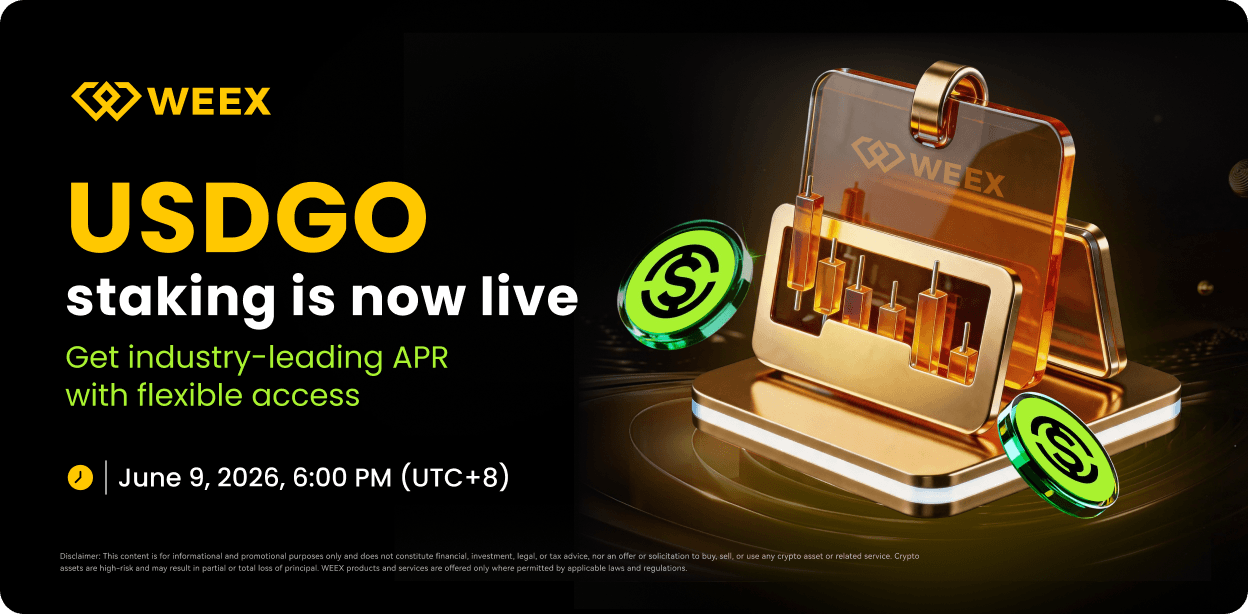
- Current USDGO flexible staking rates vary across exchanges, with differences becoming especially meaningful for smaller balances.
What the outflow data is actually telling you
- The selling pressure was sustained, not a single panic day. Multiple rolling windows (7-day, 10-day, 20-day) all hit record outflow levels during this period, meaning the pressure built steadily rather than spiking once.
- Price and redemptions fed each other. Total ETF assets shrank from about $104.3 billion to $82.8 billion in three weeks — a $21.5 billion drop — as falling BTC price (down roughly 21%, from above $80K to around $63K) compounded the redemption-driven outflows.
- The tide may have turned, narrowly. On June 12, all 12 spot Bitcoin ETFs recorded zero net outflows for the first time in this stretch, with five funds posting net inflows totaling $85.8 million. Standard Chartered flagged this "clean day" — alongside continued Strategy purchases and falling oil prices — as one of three signals it's watching for a cycle bottom.
Why ETF flow moves price more than most headlines do
- IBIT's outflow alone (~$3.3B) is larger than the entire previous outflow record (the 8-day, $3.2B stretch from February 2025) — meaning one fund, in fewer days, moved more money out than the entire market did during the prior worst stretch.
- ETF-held BTC fell to about 1.277 million coins, down roughly 7.2% from the October 2025 peak. ETFs now hold about 6.36% of circulating BTC, down from over 7% in mid-May.
- May alone saw $2.43 billion in net outflows — the largest monthly outflow on record for these products — with $1.42 billion of that concentrated in the final week.
- Even with the redemption wave, cumulative net inflows since the January 2024 launch remain above $55 billion, less than $10 billion off the all-time peak. Bloomberg ETF analyst Eric Balchunas has characterized the $4.4B outflow as a sharp momentum reversal rather than a structural collapse of the product category.
What Standard Chartered is actually watching for a bottom
- Continued BTC purchases by Strategy (formerly MicroStrategy) — a proxy for committed long-term buyers staying in accumulation mode through the drawdown.
- A positive net-inflow day across spot Bitcoin ETFs — which arrived on June 12, when all 12 funds posted zero outflows and five logged net inflows totaling $85.8 million.
- Continued softening in oil prices — a macro liquidity signal that frees up risk appetite across asset classes.
Where Are Traders Parking Capital During Market Uncertainty?
| Platform | Flexible APY Tiers |
| M**C | 0–200: 10% / >200: 4% |
| B**t | 0–300K: 12% / 300K–3M: 8% / 3M–5M: 4% |
| WEEX | 0–200: 20% / >200: 12% |
Doing the actual math
- M**C (10%): 20 USDGO/year
- B**t (12%): 24 USDGO/year
- WEEX (20%): 40 USDGO/year
- M**C: 200 × 10% + 800 × 4% = 20 + 32 = 52 USDGO/year
- B**t: 1,000 × 12% (within the 0–300K bracket) = 120 USDGO/year
- WEEX: 200 × 20% + 800 × 12% = 40 + 96 = 136 USDGO/year
Frequently asked questions
Where Are Traders Parking Their Cash?
About WEEX
Follow WEEX on social media
Disclaimer: This content is provided for general branding and informational purposes only and doesn't constitute financial, investment, legal, or tax advice. Any events, rewards, online events, or related information mentioned herein should not be considered a recommendation, solicitation, or invitation to purchase, sell, trade, or otherwise deal in any crypto assets or to use any services. Crypto assets are highly volatile and may result in loss. WEEX services and online events may not be available in all regions and are subject to applicable laws, regulations, and eligibility requirements. You are responsible for ensuring that your use of WEEX services complies with local laws and for carefully assessing the risks before participating in any crypto-related activities.
You may also like

SpaceX Stock Near IPO Price: What Traders Need to Know
SpaceX stock trades near $139, just 3.1% above its $135 IPO price after a sharp retrace from above $200. Here is what the move means.

Why Is XRP Down 60% Despite ETF Inflows and Ripple’s SEC Case Ending?
Why is XRP down nearly 60% despite ETF inflows and the end of Ripple’s SEC case? Explore the role of market weakness, Open USD and the CLARITY Act.

When Security Is Tested, True Responsibility Matters: Why WEEX Puts Users First
At WEEX, we believe that an exchange's responsibility goes beyond providing a trading platform. It means standing with users, building transparent security systems, and creating safeguards that provide support when users need it most.

Fed Monetary Policy Report 2026: What It Means for Bitcoin, Crypto Liquidity, and the Next Bull Market
The Federal Reserve's July 2026 Monetary Policy Report reveals why interest rates are likely to stay higher for longer, how AI is reshaping the economy, and what these structural changes mean for Bitcoin, crypto liquidity, and the next bull market.

Fear & Greed Index Today: What Extreme Fear Means for Crypto, Stocks and Gold

Should You Buy Bitcoin Now? What the Data Says After a 50% Pullback

$10,000 in TRUMP Token vs. $10,000 in Nasdaq: The "Trump Trade" That Actually Worked in 2026

Cape Verde 2-3 Argentina: The Underdog Team That Stunned the World in Defeat
Cape Verde's run ended in a 3-2 defeat to Argentina, but their journey — three unbeaten draws, one heroic goalkeeper, and a fight that pushed the defending champions to the brink — is the kind of story markets recognize too: small caps can rattle blue chips long before anyone expects it.

Portugal 2-1 Croatia: Ronaldo's 20-Year Knockout-Stage Drought Ends With a Debt Finally Collected
Portugal beat Croatia 2-1 in the 2026 global football championship's knockout rounds as Ronaldo scored his first-ever knockout-stage goal, Gonçalo Ramos struck a stoppage-time winner, and VAR ruled out a late equalizer for offside.

Bitcoin Price Prediction July 2026: Will BTC Recover to $70K or Drop Below $55K?

Why Tokenized Stocks Are Booming in 2026 While Crypto Is Still Struggling
Argentina vs Cape Verde: When a Record-Breaking Legend Meets an Unbreakable Underdog
WEEX exclusive pre-match analysis of Argentina vs Cape Verde, exploring Messi-led Argentina’s dominance and Cape Verde’s historic defensive breakout, with a breakdown of volatility, structure, and match dynamics.

Why Is Bitcoin Lagging Stocks in 2026? AI Stocks, ETF Outflows, and the Nasdaq Rally Explained

Why Is Bitcoin Down in 2026? What We Can Learn From 2022
Why Is Bitcoin Falling Below $60K? 5 Key Market Drivers Explained
Bitcoin has dropped sharply amid ETF outflows, Strategy stock weakness, AI stock rallies, and changing Fed expectations. Explore the key forces driving BTC’s latest correction and what traders should watch next.

Bitcoin vs. Gold in 2026: Which Asset Performs Better in Different Markets?
Why Is PAXG Price Different From Gold? 5 Reasons Crypto Traders Should Know

NYSE Parent ICE and OKX Launch Joint Venture: What It Means for Tokenized Stocks
ICE and OKX have announced a joint venture focused on tokenized stocks, but stock futures are already live across crypto markets. Here's what the partnership means, how stock futures work, and why traders are paying attention.

How to Trade Apple and Nvidia on a Crypto Exchange in 2026 (Without Buying Shares)

Bitcoin Market Analysis 2026: Can BTC Reach $150K by Year-End?

Why Is Bitcoin Down Today? What the Hawkish FOMC Means for SpaceX, Gold and Nasdaq

Will Gold Break $4,500 After Tonight's Fed Decision? What XAUT and PAXG Traders Need to Know

SpaceX Stock Prediction After the IPO: Can SPCX Reach $200 Before QQQ Inclusion?

Can the CLARITY Act Become Law by July 4? Everything You Need to Know About the Final Battle
France vs Senegal World Cup 2026: Mbappe’s New Era Begins Against a Historic Rival

SpaceX IPO, Nvidia, and Bitcoin: Why Traders Are Watching More Than Just Crypto in 2026
Why Is BlackRock Investing $5 Billion in the SpaceX IPO?

SpaceX vs Tesla vs xAI: Which Elon Musk Trade Has the Biggest Upside in 2026?
Bitcoin Trading Guide 2026: Strategies for Experienced Traders
What Is XAUT and PAXG? Why Tokenized Gold Is Booming in 2026
SpaceX Stock Near IPO Price: What Traders Need to Know
SpaceX stock trades near $139, just 3.1% above its $135 IPO price after a sharp retrace from above $200. Here is what the move means.
Why Is XRP Down 60% Despite ETF Inflows and Ripple’s SEC Case Ending?
Why is XRP down nearly 60% despite ETF inflows and the end of Ripple’s SEC case? Explore the role of market weakness, Open USD and the CLARITY Act.
When Security Is Tested, True Responsibility Matters: Why WEEX Puts Users First
At WEEX, we believe that an exchange's responsibility goes beyond providing a trading platform. It means standing with users, building transparent security systems, and creating safeguards that provide support when users need it most.
Fed Monetary Policy Report 2026: What It Means for Bitcoin, Crypto Liquidity, and the Next Bull Market
The Federal Reserve's July 2026 Monetary Policy Report reveals why interest rates are likely to stay higher for longer, how AI is reshaping the economy, and what these structural changes mean for Bitcoin, crypto liquidity, and the next bull market.
Fear & Greed Index Today: What Extreme Fear Means for Crypto, Stocks and Gold
Should You Buy Bitcoin Now? What the Data Says After a 50% Pullback

Contents
Latest articles





Latest coin listings on WEEX


