
Micron Stock Price Prediction 2026–2027: Can MU Reach $2,000

 Prefer us on Google


MU stock has already done something that takes most companies decades to accomplish. A roughly 700% gain over the past twelve months. A market capitalization above one trillion dollars. Record earnings in consecutive quarters with guidance pointing to further acceleration. MU stock is now one of the defining stories of the AI infrastructure trade, and the question the market is actively debating is not whether Micron is a great business but whether the current price leaves room for the next leg.
Getting from approximately $938 to $2,000 means MU stock roughly doubling from current levels. That is not a modest ask for a stock that has already gained 700% in a year. But the earnings mathematics behind it are more grounded than the headline number suggests, and understanding those mechanics is more useful than simply noting how far the stock has already traveled.
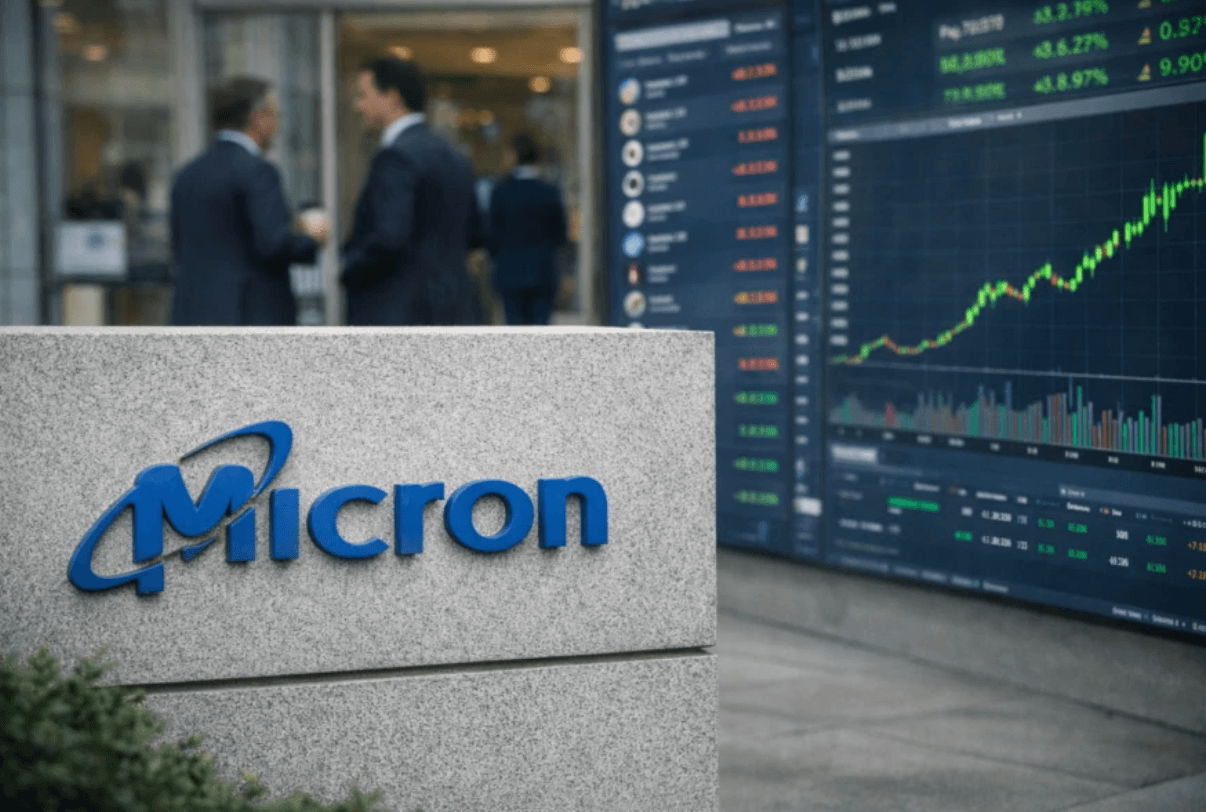
The Earnings Math That Makes $2,000 Possible
The most direct path to any stock price target runs through earnings, and MU stock's earnings trajectory is where the $2,000 case starts to look coherent rather than aspirational.
Q3 fiscal 2026 results showed revenue of $41.5 billion, up 346% year over year, with EPS of $25.11 against an estimate of $20.60. Q4 guidance of $50 billion surprised analysts who had expected approximately $43 billion. Full fiscal year 2026 EPS is expected to reach approximately $93 to $95 per share based on the Q4 guidance trajectory.
Fiscal 2027 EPS estimates are where the $2,000 discussion gets specific. Wall Street consensus for fiscal 2027 EPS currently sits at approximately $148 to $155. Some more aggressive models, including the Motley Fool analysis published this week, suggest that if Micron's earnings continue compounding at the rate the Q3 and Q4 trajectory implies, EPS could reach $298 by fiscal 2027 essentially a double from the already elevated fiscal 2026 estimates.
The multiple that the market assigns to those earnings is the second variable. MU stock currently trades at a forward price to earnings ratio of approximately 6.7 times on fiscal 2027 consensus estimates. That is extraordinarily low for a company growing earnings at triple digit rates. If that multiple expands to 13 times fiscal 2027 EPS of $155, the implied price is approximately $2,015. That is the realistic path to $2,000 not heroic earnings growth alone, but a combination of continued strong earnings and a modest multiple expansion from a historically compressed starting point.
Why MU Stock Trades at Such a Low Multiple
Understanding why MU stock trades at 6.7 times forward earnings is essential for evaluating whether multiple expansion is likely or whether the low multiple is justified.
The market assigns memory stocks low multiples because memory markets are historically cyclical. Prices collapse when supply exceeds demand, as they did in 2023 when Micron reported a $5.86 billion annual operating loss. Investors who have watched that cycle play out before price memory stocks with a discount for the inevitable downturn, even when current results are exceptional.
The specific argument for why MU stock's multiple should expand toward 13 times or higher rests on two structural changes that distinguish this cycle from previous ones.
The contracted revenue structure is the first. Micron has signed 16 long-term strategic customer agreements with binding purchase commitments. The CEO indicated that approximately half or more of company revenue could eventually be covered by these agreements. When a meaningful portion of revenue is contracted rather than spot-priced, the earnings volatility that justified the cyclical discount diminishes. Markets pay higher multiples for more predictable earnings, and the contracted structure makes Micron's earnings more predictable than any previous memory cycle.
HBM product differentiation is the second. High-bandwidth memory is not interchangeable in the way commodity DRAM is. Once designed into Nvidia's GPU platforms, customers cannot switch suppliers mid-generation. That design in stickiness gives HBM revenue a durability that historical DRAM spot pricing never had. If the market begins to recognize HBM as a structurally differentiated product rather than a commodity, the multiple attached to HBM revenue should be higher than the commodity multiple that has historically defined memory stock valuations.
What the Japan Factory Expansion Signals
Micron broke ground today on a 1.5 trillion yen expansion of its Hiroshima factory in western Japan, representing approximately $9.3 billion in capital commitment specifically for advanced memory chips used in AI processors.
That capital commitment is relevant to the $2,000 price prediction for a specific reason. A company that disagrees with its own bull case does not commit $9.3 billion to expanding production capacity for AI memory chips. The Japan expansion is internal management's most concrete expression of confidence in the demand trajectory that the $2,000 price prediction depends on.
The expansion also adds to the supply picture that skeptics like Michael Burry cite as a future risk. More capacity from Micron, combined with Samsung's $648 billion Korean investment plan and SK Hynix's Yongin cluster, does mean more supply coming online in 2027 and 2028. The bull case is that AI demand scales fast enough to absorb all of that supply without normalizing the extraordinary pricing environment. The bear case is that it does not. The Japan expansion is both an expression of confidence in the bull case and a contributor to the supply addition that the bear case depends on.

Three Scenarios for MU Stock by End of Fiscal 2027
Rather than a single number, mapping what different conditions produce gives investors a more useful framework than a point estimate.
In a strong scenario, fiscal 2027 EPS reaches $200 or above as HBM pricing holds, contracted revenue delivers as modeled, the Japan and US manufacturing expansions ramp efficiently, and the multiple expands from 6.7 times to 10 times as investors recognize the structural differentiation. In this environment, MU stock reaches $2,000 by mid to late 2027, and the most aggressive targets of $2,000 to $2,200 that some analysts are beginning to model come into discussion before fiscal year end.
In a moderate scenario, fiscal 2027 EPS reaches $148 to $155 as consensus models, the multiple expands modestly from 6.7 to approximately 9 to 10 times as the contracted revenue structure becomes more visible in quarterly results, and MU stock reaches somewhere between $1,300 and $1,500. That is consistent with the current analyst average target of $1,486 and represents strong absolute returns from current levels without requiring the heroic assumptions of the strong scenario.
In a cautious scenario, supply additions from Samsung, SK Hynix, and Micron itself begin normalizing HBM pricing in late 2026 or early 2027, fiscal 2027 EPS falls short of consensus, and Michael Burry's cyclicality thesis proves correct. MU stock could retrace toward the $700 to $800 range before recovering as the next product cycle begins. In this scenario, the $2,000 target becomes a 2028 or 2029 story rather than a 2027 one.
The Michael Burry Factor
Any MU stock price prediction today has to engage with the Burry short rather than ignore it, because it represents a specific and credible argument that challenges the bull case assumptions.
Burry's implicit thesis on MU stock is that this memory cycle will turn the way previous ones have, that the contracted revenue and HBM differentiation arguments are insufficient to prevent a meaningful earnings decline when supply additions eventually exceed AI demand growth, and that MU stock at current levels is pricing in conditions that will not persist.
The most direct counter to the Burry thesis is the CEO commentary. Sanjay Mehrotra said on the Q3 earnings call that memory market tightness is locked in beyond calendar 2027. SK Hynix management said customer demand for HBM for the next three years far exceeds production capacity. Both CEOs have visibility into contracted order books that public investors do not. Their explicit supply constraint guidance is not a marketing claim that can be dismissed without specific counter-evidence.
Burry has been right about cyclical turning points before and wrong about timing before. Both things are simultaneously true. Investors who bought Tesla after Burry shorted it in 2020 made significant returns before eventually facing a downturn. The question for MU stock is whether the supply tightness that management is describing is real and durable enough to sustain the earnings trajectory the $2,000 target requires for the next eighteen months.
The Stock Split That Could Happen Before $2,000
One nearterm variable that could affect MU stock's trajectory toward $2,000 is a potential stock split that multiple analyses have identified as increasingly likely.
At approximately $938, MU stock is the highest priced major semiconductor stock on US exchanges. Nvidia's 10 for 1 split in 2024 demonstrated that high profile splits generate positive price momentum through the announcement and execution period, primarily through expanded retail accessibility and the positive signal that management is confident about future price appreciation.
If Micron announces a split in the second half of 2026, the mechanical price reduction would bring MU stock into a range that is accessible to more retail investors without fractional share programs, potentially expanding the buyer base and supporting the multiple expansion the $2,000 case depends on. A split announcement does not change the fundamental business but has historically accelerated the rate at which retail capital flows into recently split stocks.
For investors evaluating the path to $2,000, a split is a potential accelerant rather than a driver. The fundamental earnings trajectory is what ultimately matters. But the split discussion adds a short-term catalyst that could compress the timeline between current prices and the targets the bull case projects.
For investors tracking stock, WEEX provides access to stock trading products, including the First Stock Trade Protected campaign offering eligible users additional protection on their first stock trade.
Conclusion
MU stock reaching $2,000 by fiscal year 2027 is the strong scenario, not the base case. The analyst consensus of $1,486 represents the base case, and even that requires meaningful multiple expansion from the 6.7 times forward earnings that MU stock currently trades at.
The path to $2,000 runs through two things that are both achievable but neither guaranteed: fiscal 2027 EPS reaching $155 or above as the contracted revenue structure delivers and HBM pricing holds, and the market assigning a multiple of 13 times or higher to those earnings as investors recognize that this memory cycle has structural characteristics that previous ones did not.
Michael Burry's short is a legitimate warning that deserves serious consideration rather than dismissal. The 45 analyst consensus is a legitimate endorsement that deserves equal weight. Between those two serious views, the actual outcome will be determined by whether HBM supply constraints persist as management projects and whether the contracted revenue structure proves as durable as the bull case requires.
The earnings report in late September will provide the next meaningful data point on both questions. Until then, $2,000 is the destination the most optimistic credible scenario points toward. Whether it arrives by 2027 or takes longer depends on which camp is more right about the most important question in semiconductor investing today.
FAQ
1. Can Micron stock reach $2,000 by 2027?
It is the strong scenario rather than the base case. It requires fiscal 2027 EPS reaching approximately $155 or above combined with multiple expansion from the current 6.7 times toward 13 times forward earnings. The analyst consensus target of $1,486 represents the more widely held view of where MU stock goes over the next twelve months.
2. What is MU stock price today?
MU stock is trading at approximately $976, down roughly 22% from its 52-week high of $1,255 but up approximately 241% year to date and roughly 700% over the past year.
3. What do analysts predict for MU stock?
Forty-five analysts rate MU stock as a Strong Buy with an average 12 month price target of $1,486, implying approximately 52% upside from current levels. The most bullish recent analysis suggests a path to $2,000 within twelve months based on continued earnings acceleration and multiple expansion.
4. Why does MU stock trade at such a low earnings multiple?
Memory stocks historically trade at low multiples because the industry is cyclical and has experienced severe downturns including Micron's $5.86 billion operating loss in 2023. The bull case is that contracted long-term revenue agreements and HBM product differentiation justify a higher multiple than historical memory stock averages.
5. What is the biggest risk to MU stock reaching $2,000?
Supply additions from Micron, Samsung, and SK Hynix normalizing HBM pricing before AI demand grows enough to absorb the additional capacity is the primary risk. This is the core of Michael Burry's short thesis and represents the scenario where fiscal 2027 earnings fall short of the levels the $2,000 target requires.
Disclaimer
This content is provided for general informational and educational purposes only and should not be considered financial, investment, legal, or tax advice. Nothing in this article constitutes an offer, recommendation, solicitation, or invitation to buy, sell, or trade any crypto asset or use any specific service. Crypto assets are highly volatile and involve a high degree of risk. You may lose some or all of the value of your investment and should not invest funds you cannot afford to lose. WEEX services may not be available in all regions and are subject to applicable laws, regulations, and user eligibility requirements. Please carefully assess risks and confirm local requirements before making any financial decisions.
Disclaimer: This content is provided for general branding and informational purposes only and doesn't constitute financial, investment, legal, or tax advice. Any events, rewards, online events, or related information mentioned herein should not be considered a recommendation, solicitation, or invitation to purchase, sell, trade, or otherwise deal in any crypto assets or to use any services. Crypto assets are highly volatile and may result in loss. WEEX services and online events may not be available in all regions and are subject to applicable laws, regulations, and eligibility requirements. You are responsible for ensuring that your use of WEEX services complies with local laws and for carefully assessing the risks before participating in any crypto-related activities.
You may also like

Top 5 DApps and Mini Apps to Try on TON in 2026
If you’re exploring TON this year, start with apps that show real usage, simple onboarding, and clear utility.…

How to Buy and Store Toncoin (TON): A Step-by-Step Guide
This guide shows beginners how to buy Toncoin (TON) through mainstream exchanges and Telegram’s built-in wallet, then move…
TON vs Solana: Which Blockchain Has the Bigger Edge?
TON and Solana both chase mass-scale, low-cost transactions—but they win in different ways. This guide compares where their…

SKHYON Airdrop: How to Share 50,000 USDT Rewards on WEEX
This guide explains what SKHYON is, how the WEEX SKHYON Airdrop works, and the steps to participate efficiently…

How to Set Up a TON Wallet: Step-by-Step Beginner’s Guide
This guide walks you through two clean paths to start with a TON wallet: the wallet built into…

What Is TON? The Blockchain Behind Telegram, Explained
Many first learn about TON from Telegram’s built-in wallet and mini apps. This guide explains what TON is,…
CRUDEOIL Price Prediction July 2026: Forecast as tokenized crude tracks macro headwinds and range-bound trade
Crude Oil (CRUDEOIL) reflects tokenized exposure to crude oil futures. At the time of writing, CoinMarketCap data shows…

How to Log In to MetaMask: Unlock, Troubleshooting and Recovery (2026)
Coinbase Stock (COIN): Price, Outlook and How to Buy

Strategy Stock (MSTR): What It Is, Price, Outlook and How to Buy

Intel Stock (INTC): Price, Outlook and How to Buy

Alphabet Stock (GOOG): Price, Outlook and How to Buy
Nebius Stock (NBIS): Price, Outlook and How to Buy
AMD Stock: Price, Outlook and How to Buy
Meta Stock (META): Price, Outlook and How to Buy
Amazon Stock (AMZN): Price, Outlook and How to Buy
Micron Stock (MU): Price, Outlook and How to Buy

Nasdaq-100 and Dow Jones: Prices, Outlook and How to Trade
Palantir Stock (PLTR): Price, Outlook and How to Buy

France vs Spain Prediction Market: What Polymarket Says About the World Cup Semifinal
The France vs Spain prediction market on Polymarket gives France 41% probability of winning in 90 minutes, a draw at 30%, and Spain at 30%. This guide examines what the near even split actually reveals about two teams that have taken opposite paths to the final four.
Apple Stock (AAPL): Price, Outlook and How to Buy
Tesla Stock (TSLA): Price, Outlook and How to Buy
Microsoft Stock (MSFT): Price, Outlook and How to Buy
NVIDIA Stock (NVDA): Price, Outlook and How to Buy
SanDisk Stock (SNDK): Price, Outlook and How to Buy
SK Hynix Stock (SKHY): Price, Outlook and How to Buy

Is SNDK Stock a Buy After Falling 25% This Month? What Analysts Say Before August 5 Earnings
SNDK stock has fallen approximately 25% from its recent peak in a month where Evercore raised its target to $3,100, Goldman raised to $2,200, and Citigroup reiterated $2,500. August 5 earnings is the next major catalyst. This guide focuses on the buy decision specifically, examining what the 25% monthly decline changes about the risk-reward rather than repeating the analyst target discussion.

Oracle Stock Price Prediction 2026–2027: Can ORCL Reach $250?
Oracle stock is trading near $132, roughly 62% below its all time high. The average analyst target sits near $247. This guide examines what the path to $250 actually requires, what the specific catalysts are on each timeline, and what the realistic range of outcomes looks like over the next eighteen months.

Is ORCL a Buy? What Oracle Stock's 14 Month Low Tells Investors
Oracle stock touched a 14 month low of approximately $130.76 on July 14, down roughly 62% from its all time high.This guide examines what the 14 month low actually reveals about Oracle's specific situation and whether the business case justifies buying at current prices.

How to Buy SanDisk Stock: SNDK, Leveraged ETFs and Options Explained
SanDisk stock trades on Nasdaq under the ticker SNDK and can be bought through any standard US brokerage account. But SNDK is also surrounded by leveraged ETF products and an active options market that give investors and traders different ways to express views on the AI NAND thesis. This guide explains each approach, what it costs in structure and risk, and which one suits which investor.
Top 5 DApps and Mini Apps to Try on TON in 2026
If you’re exploring TON this year, start with apps that show real usage, simple onboarding, and clear utility.…
How to Buy and Store Toncoin (TON): A Step-by-Step Guide
This guide shows beginners how to buy Toncoin (TON) through mainstream exchanges and Telegram’s built-in wallet, then move…
TON vs Solana: Which Blockchain Has the Bigger Edge?
TON and Solana both chase mass-scale, low-cost transactions—but they win in different ways. This guide compares where their…
SKHYON Airdrop: How to Share 50,000 USDT Rewards on WEEX
This guide explains what SKHYON is, how the WEEX SKHYON Airdrop works, and the steps to participate efficiently…
How to Set Up a TON Wallet: Step-by-Step Beginner’s Guide
This guide walks you through two clean paths to start with a TON wallet: the wallet built into…
What Is TON? The Blockchain Behind Telegram, Explained
Many first learn about TON from Telegram’s built-in wallet and mini apps. This guide explains what TON is,…

Contents
Latest articles


Latest coin listings on WEEX


