
USOE Price Drop: Why Did United States Oil Exchange Fall Over 90% in a Week?

 Prefer us on Google



No confirmed cause for the USOE price drop has been published. What the data shows is that United States Oil Exchange (USOE) fell more than 90% on two separate trackers, and that the fall appears to have happened within about a day.
Bitrue shows a 7-day change of -93.72%, and Coinbase’s USOE price page shows a 1-day change of -93.74%. The reasons behind the move are not documented in any source reviewed, so the sections below separate what is measured from what is unknown.
How Far Did USOE Fall, and Over What Period?
Bitrue’s USOE page lists a price of about $0.0015, a market capitalization of about $1.5 million, and a 7-day change of -93.72%. The page lists an all-time high of $0.02907. The page does not show a data timestamp, and its 24-hour change and volume fields are marked as not yet established, so these figures are best used as a rough reference.
Coinbase’s USOE price page, viewed on November 10, 2026, shows a price of US$0.001745 and a 1-day change of -US$0.026156 (-93.74%). That implies a price of about $0.0279 one day earlier. The page says its data comes from CoinMarketCap and other third parties and that its accuracy is not guaranteed. It also states that United States Oil Exchange cannot be traded on Coinbase.
The two figures describe different windows and different sources, so they should not be combined into one number. Both point in the same direction: a decline of roughly 94%.

What Does the USOE Price Chart Show?
The 1-day chart on Coinbase’s page has an unusual shape. For roughly the first fifteen hours of the window, the line is almost flat at about $0.028. In the early hours of the morning, it jumps to about $0.10, based on reading the chart, and then falls almost vertically to roughly $0.002, where it stays for the rest of the window.
A flat line followed by a spike and a collapse can mean several things, including very little trading during the flat period, sparse data from the source, or a short-lived burst of buying and selling. The chart alone cannot say which. It also does not show who traded or how much volume moved.
For context, a Bitrue blog post dated October 21, 2026 recorded USOE at about $0.0051, with a market cap near $5.1 million, liquidity of about $92,000, 24-hour volume of about $70,000 and 161 holders, on a trading pair that was roughly two days old. The pre-drop level of about $0.028 was more than five times that snapshot. The two figures come from different sources, so the comparison is only a rough indication of how much the price had risen before the fall.
Has Any Explanation for the USOE Drop Been Published?
No official explanation was found. No announcement from the project, and no news report explaining the drop, appeared in the sources reviewed.
Several earlier claims remain unverified. The project’s website says USOE is backed one-to-one by oil barrels, with 2,500,000 barrels attested and monthly attestation. The Bitrue blog post found no named attestor, custodian or independent audit. The same post noted that the roadmap lists a launch on November 7, 2026 as a planned date, and no confirmation that it happened was found. The site also shows a “Coinbase listed” badge, while Coinbase’s own price page says the token cannot be traded on Coinbase.
None of this explains the drop. It does mean the claims that might support the token’s value have not been independently confirmed.
-- Price
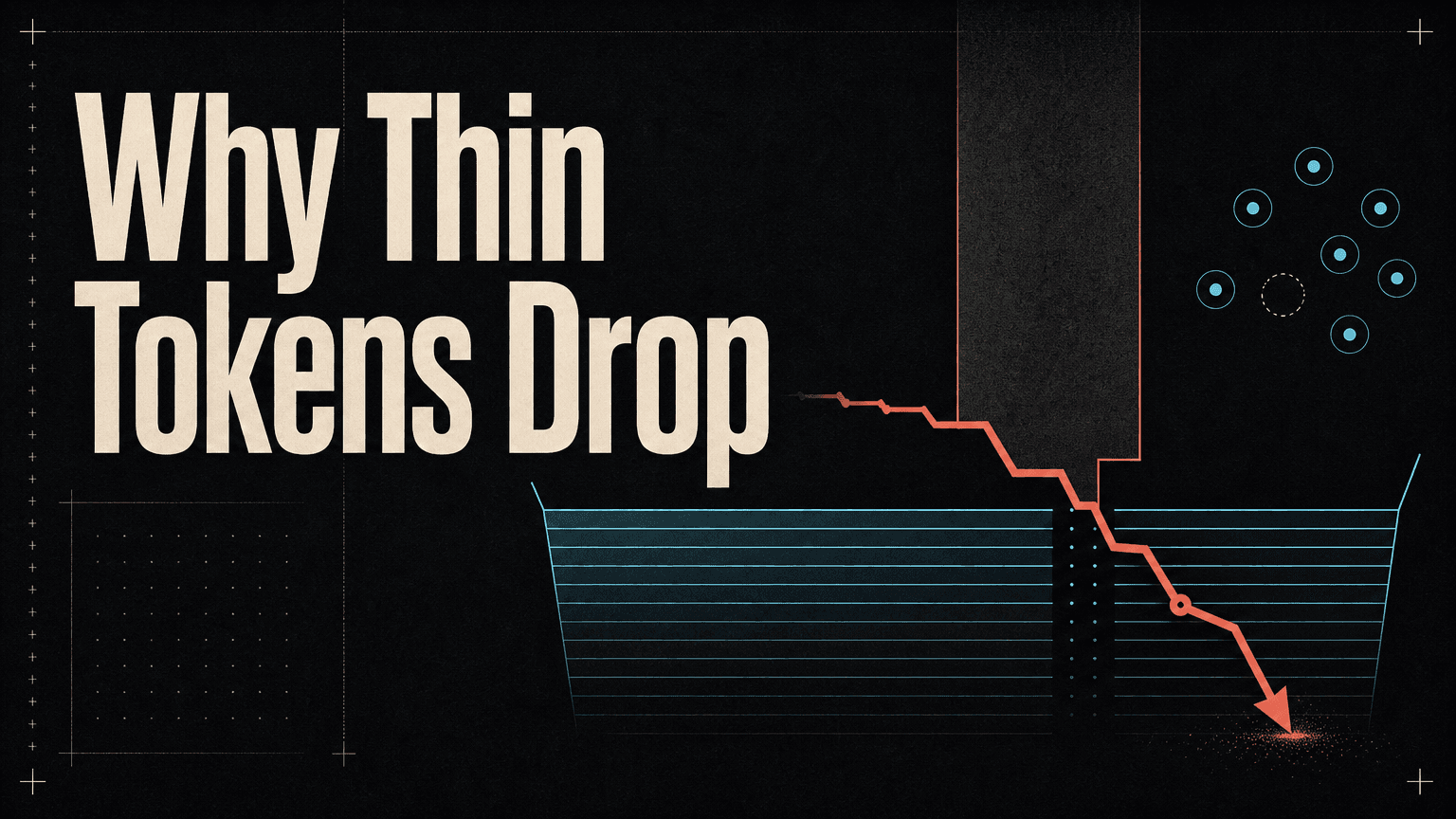
What Can Cause a Sharp Drop in a Thinly Traded Token?
The following are general patterns seen in small tokens. None of them is confirmed for USOE.
Low liquidity is the most common one. When a pool holds only tens of thousands of dollars, a single large sale can move the price by a large percentage. A small number of holders can add to this, because a few wallets selling can dominate the order flow. Liquidity can also be withdrawn from a trading pool, which leaves less to trade against and makes every sale hit harder. Finally, a rapid spike followed by a collapse can come from a short burst of speculative buying that reverses once buyers stop arriving.
Whether any of these applies to USOE can only be checked on-chain, not from a price chart.
Why Do Different Sites Show Different USOE Prices?
Trackers pull from different trading pairs, chains and time windows. Coinbase’s page shows $0.001745 and Bitrue’s shows $0.001497. Bitrue lists an all-time high of $0.02907, while Coinbase’s chart shows a spike near $0.10, so the two sources do not agree on how high the price went.
The token is also not unique in name. Searches show a USOE token on Solana and several tokens called “United States Oil Exchange (USOE)” on Base, as well as similarly named tokens such as USOX. A tracker may be following a different contract than the one a reader is looking at, which can explain part of the gap.
How Can Readers Check What Happened to USOE?
A few checks give more reliable information than a price page. The first is the contract address: confirm it against the project’s official site before reading any chart, because similar names exist on more than one chain. The second is the token’s on-chain page, such as the Solscan USOE token tracker, where the top holders, recent transfers and large sales are visible. The third is the liquidity pool, where its size and any recent withdrawals show how easily the price can move.
Official channels are also worth reading for any statement about the drop, the roadmap date or the attestation claims. If none exists, that absence is itself useful information. Prices on tracker pages change quickly, so any figure should be read with its timestamp.
Conclusion
USOE fell roughly 94% on both Bitrue’s 7-day figure and Coinbase’s 1-day figure, with the 1-day chart showing a brief spike near $0.10 before the collapse. No official explanation or independent audit has been found, and the sources disagree on several numbers. Until the cause is documented, the price drop should be treated as an unexplained event in a thinly traded token, and any claim about the reason should be checked on-chain.
FAQ
1. How much did USOE fall?
Bitrue shows a 7-day change of -93.72%, and Coinbase’s USOE price page shows a 1-day change of -93.74%. The sources use different windows and the timestamps are not aligned.
2. Why did USOE crash?
No confirmed cause has been published. The project has not been found to have issued an explanation, and no news report was found. Low liquidity and a small holder base make large moves easier in tokens like this, but that is a general pattern and not a confirmed cause for USOE.
3. Is USOE listed on Coinbase?
Coinbase’s USOE price page says United States Oil Exchange cannot be traded on Coinbase. The project’s site shows a “Coinbase listed” badge, and the roadmap places a Coinbase listing in a later phase.
4. Why do trackers show different USOE prices?
Trackers use different trading pairs, chains and time windows, and several tokens share the United States Oil Exchange name. Coinbase also states that its data comes from third parties and is not guaranteed.
5. How can a reader check what happened to USOE?
Confirm the contract address through official channels, then review the token’s holders, transfers and liquidity pool on a block explorer such as Solscan.
This content is provided for general informational purposes only and doesn't constitute financial, investment, legal, or tax advice. Any events, rewards, online promotions, or related information mentioned herein should not be considered a recommendation, solicitation, or invitation to purchase, sell, trade, or otherwise deal in any crypto assets. Crypto assets are highly volatile and may result in loss. The availability of WEEX services, products, and related events may vary by region. You are responsible for ensuring that your participation is in accordance with applicable local laws and regulations.
You may also like
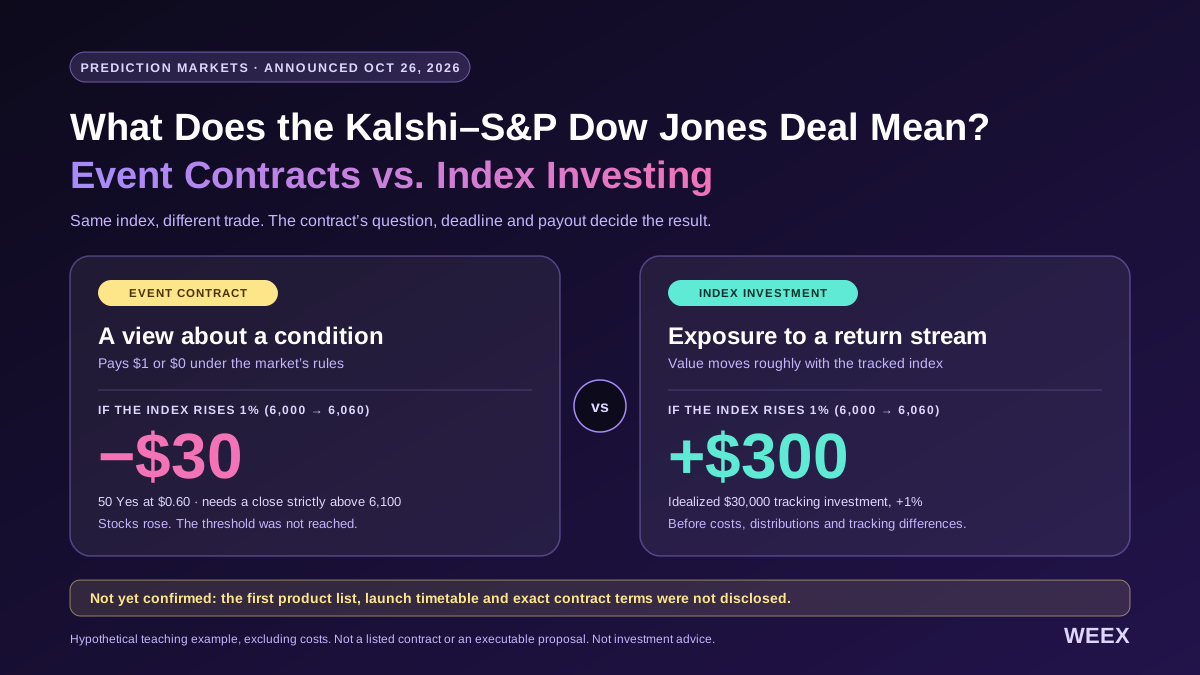
What Does the Kalshi–S&P Dow Jones Deal Mean? Event Contracts vs. Index Investing
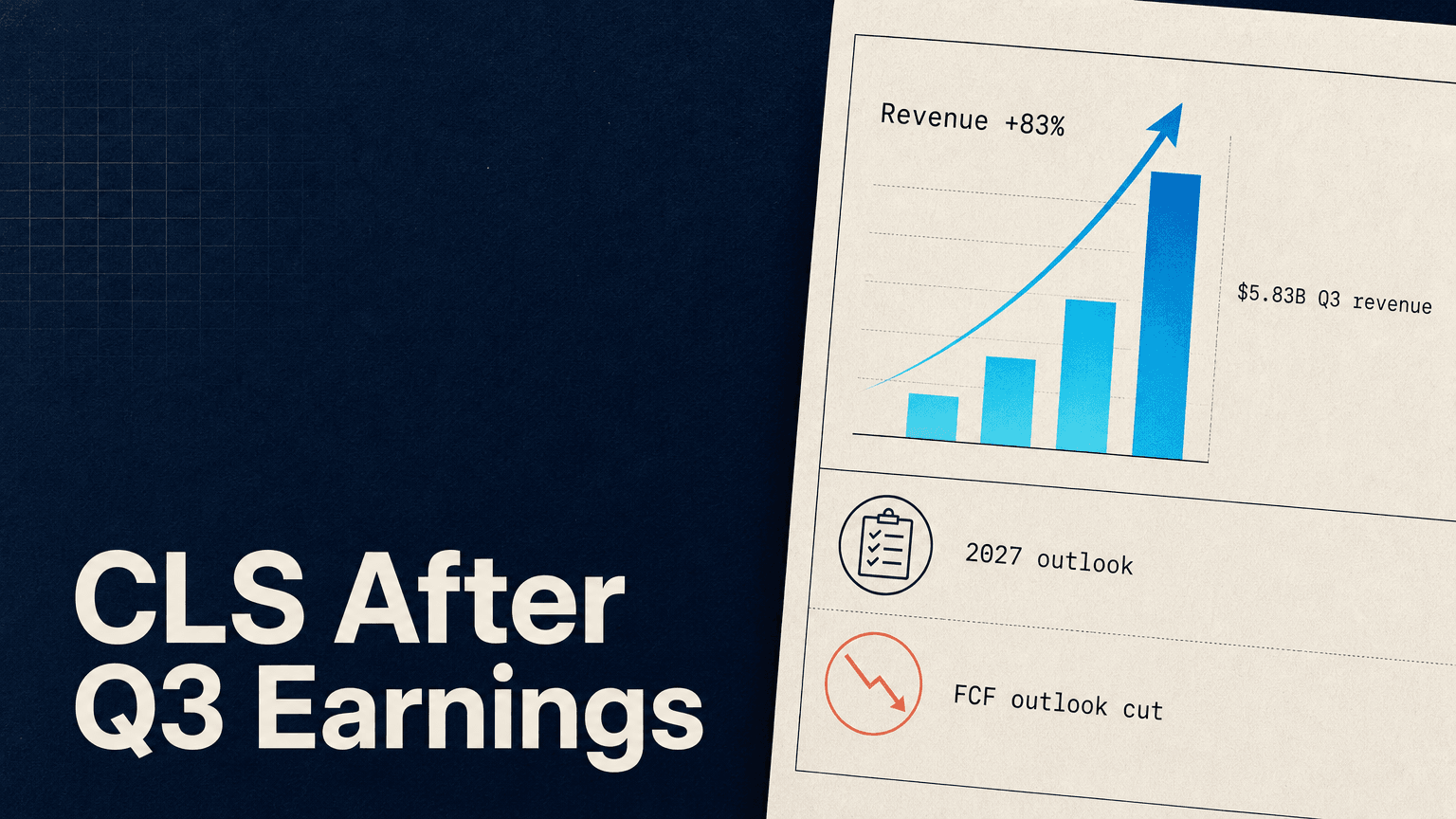
CLS Stock After Q3 Earnings: Revenue Up 83%, 2027 Outlook and What Investors Should Check
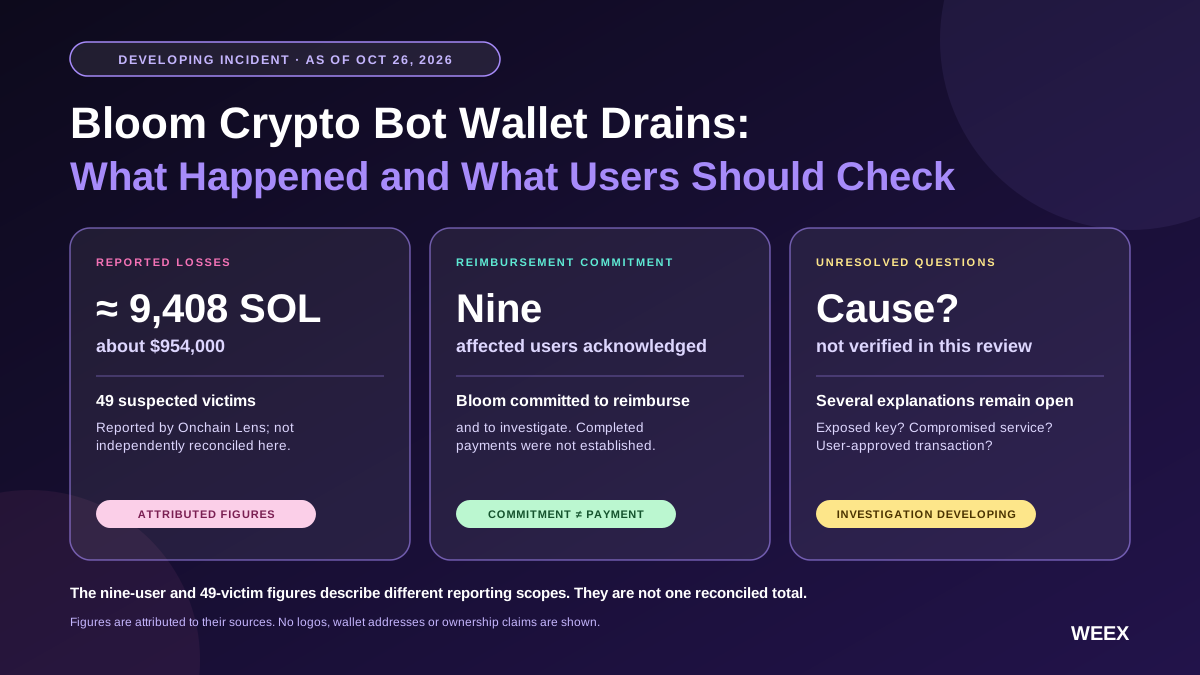
Bloom Crypto Bot Wallet Drains: What Happened and What Users Should Check

TSLA Stock After the Flying Roadster Reveal: What the Q3 Results, SpaceX Merger Talk and Analysts Say
SK Hynix Stock Before Q3 Earnings: Special Dividend Reports, HBM4 and What Investors Want to See on October 28
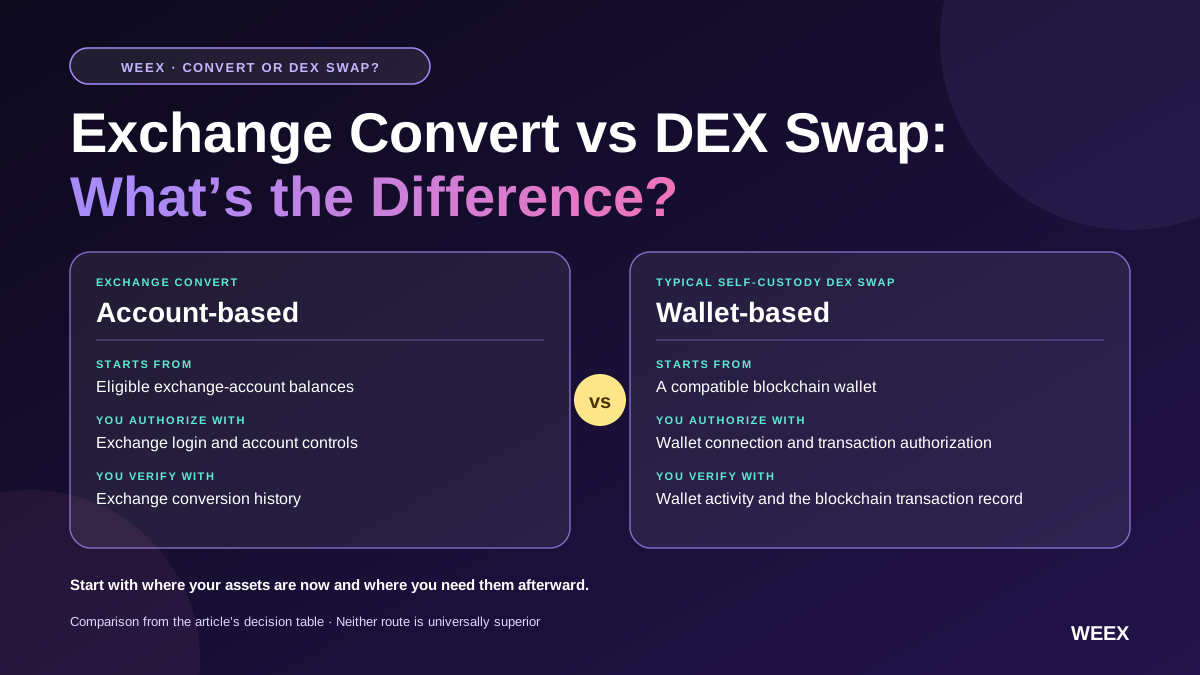
Exchange Convert vs DEX Swap: What’s the Difference? Try Convert Crypto On WEEX!
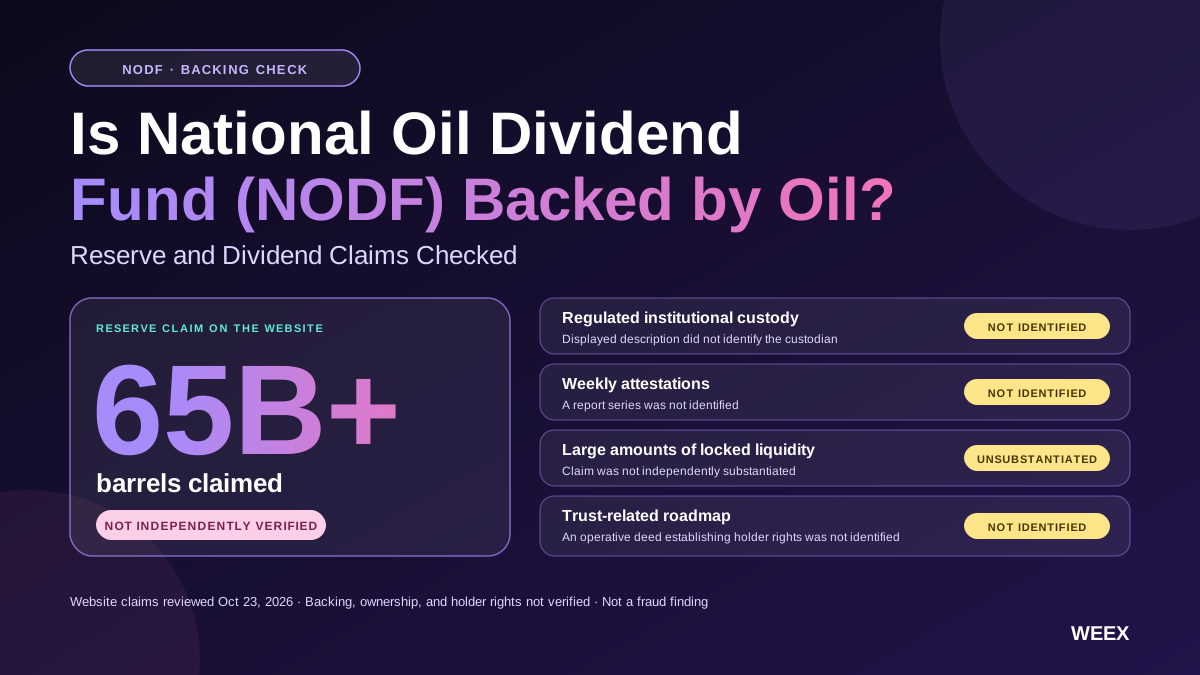
Is National Oil Dividend Fund (NODF) Backed by Oil? Reserve and Dividend Claims Checked

WEEX Convert Available Balance: How to Check and Use Max

FTR Coin After the Roadster Hype: Why Flying Tesla Roadster Fell Back and What to Check Before Trading

Flying Tesla Roadster (FTR) Coin: What Is It and What to Check Before Trading a Roadster Memecoin
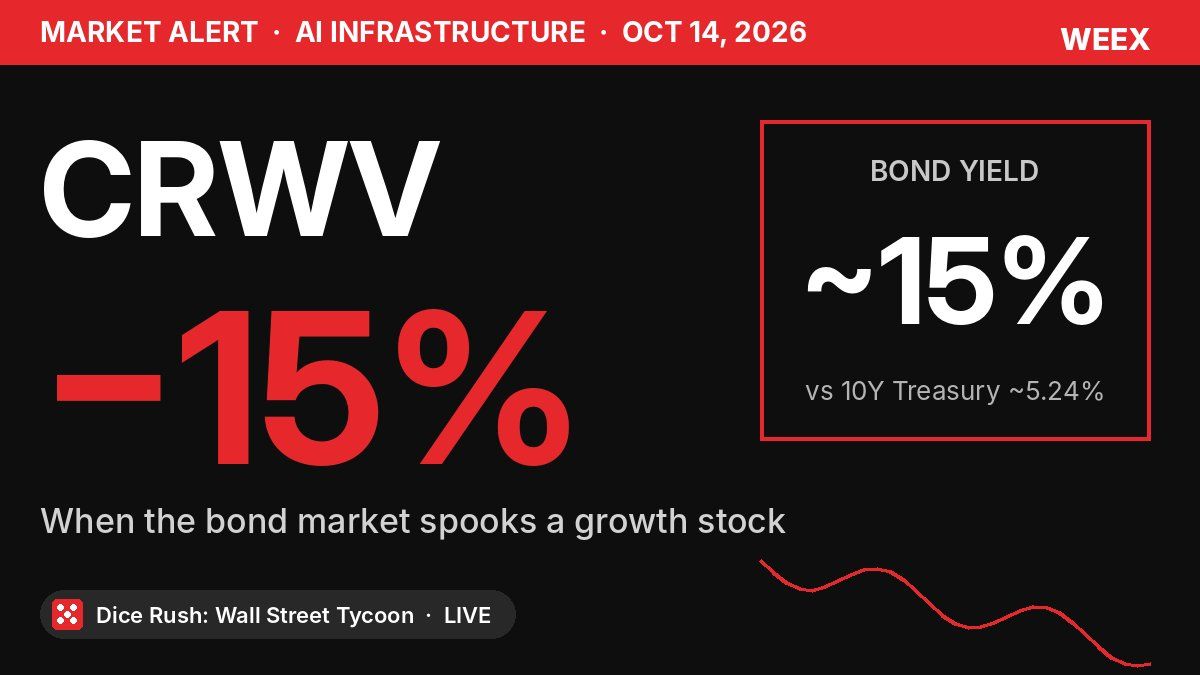
CoreWeave Stock Plunges 15%: Why a Bond Yield Spooked CRWV
PENDLE Price and FLHYon: What Franklin's Bond Token Changes
WEEX 2026 New User Guide: Register, Complete KYC, and Claim the Welcome Bonus (Step-by-Step)
WEEX Convert Guide: How to Swap Crypto on Web and App and What the Quote Really Means
MU Stock Falls Below $1,000: Is the CXMT Threat Real or Just an Excuse to Take Profits?
Stop Limit Order: How It Works and Why It Can Fail to Fill
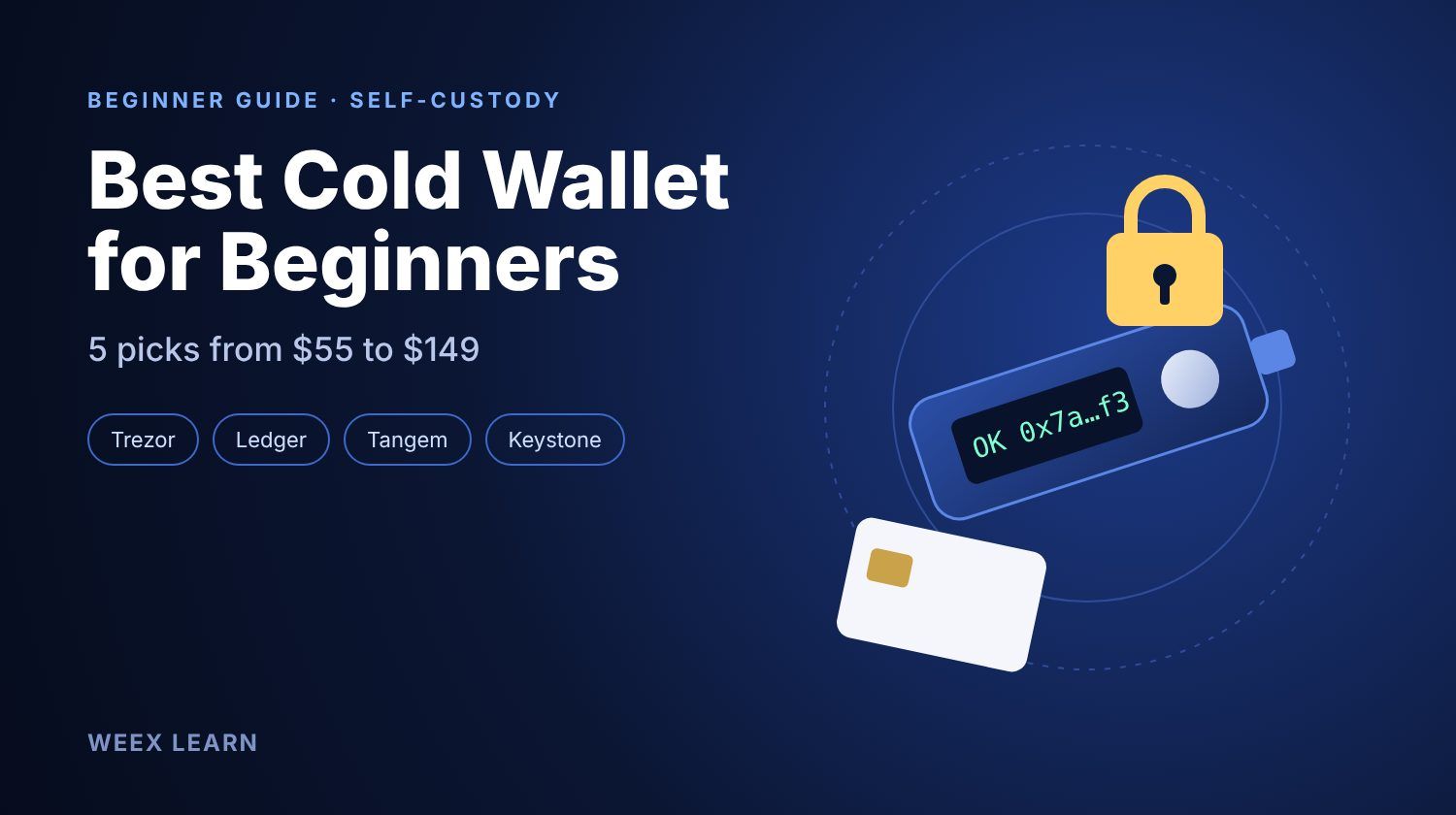
Best Cold Wallet Crypto for Beginners: 5 Picks Under $150

Best Crypto Broker for Beginners: What to Check in Fees, Regulation, Security and Support Before You Deposit

Who Is David Ellison? Skydance’s Strategy, Media Consolidation, and the Investment Case
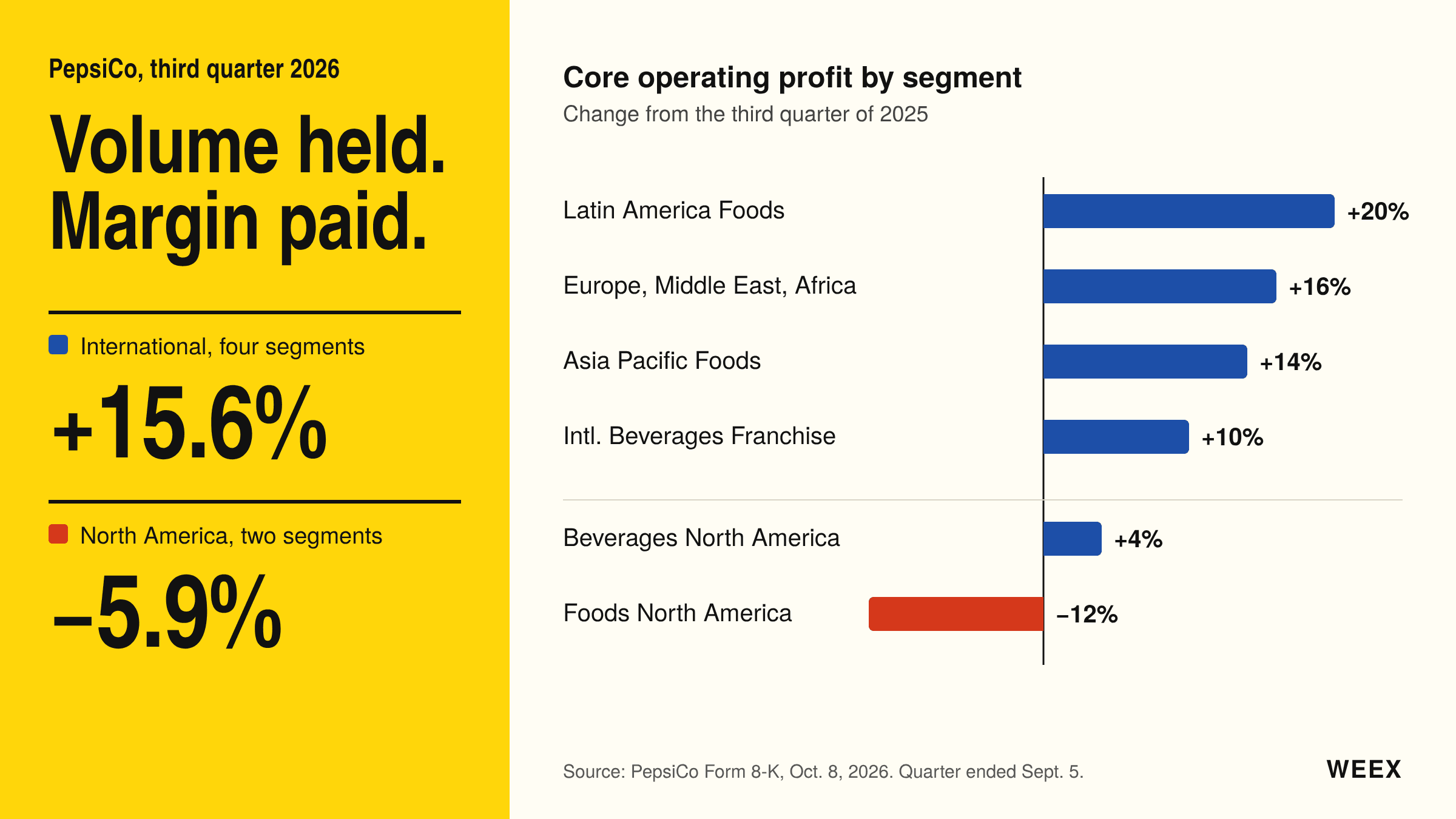
PEP Earnings: PepsiCo Beats Q3, Cuts Guidance on North America
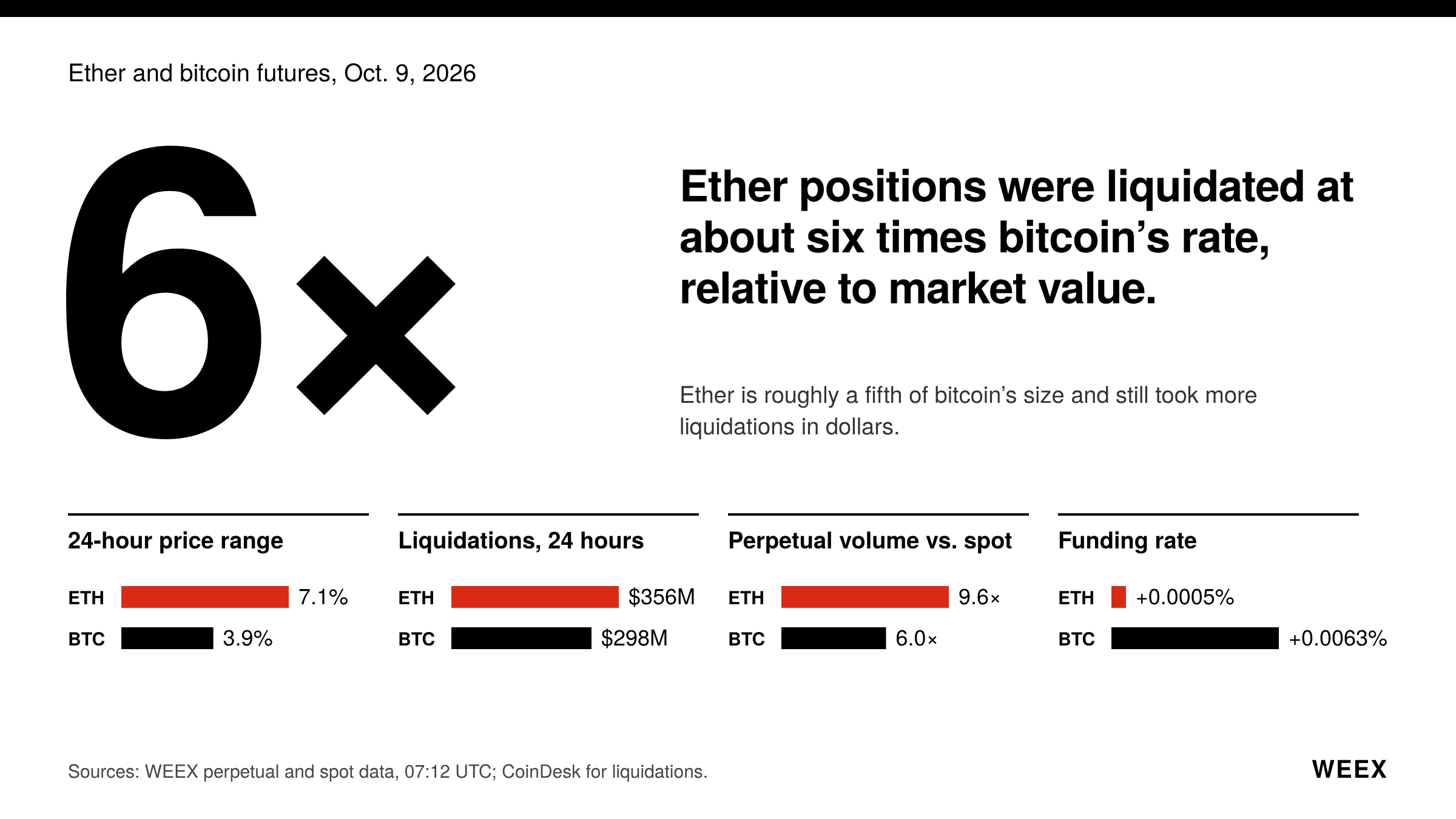
ETH Futures: Why Ether Is Falling Faster Than Bitcoin This Week
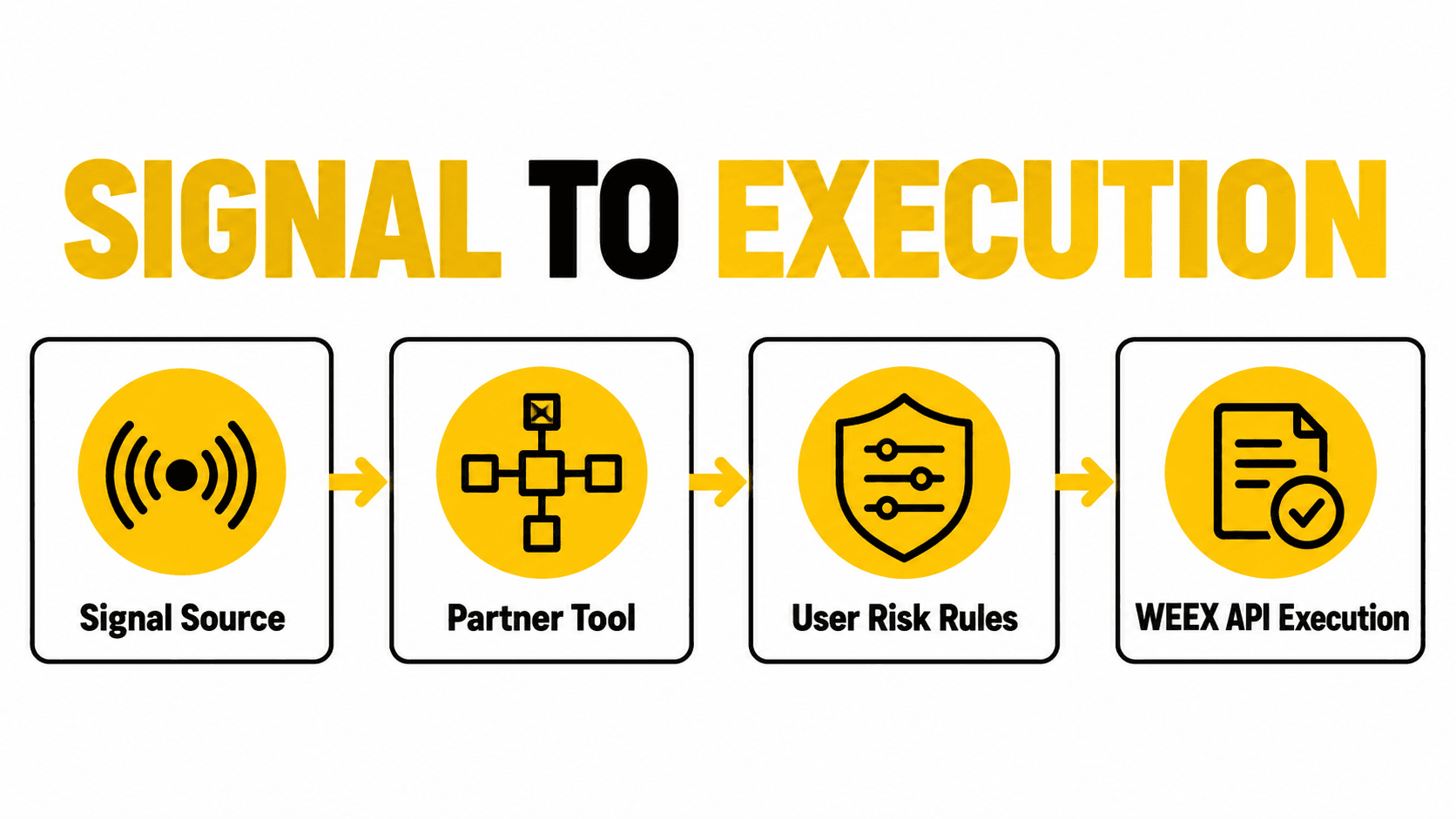
How Copy Trading, Signal, and Telegram Trading Tools Can Build With WEEX Broker
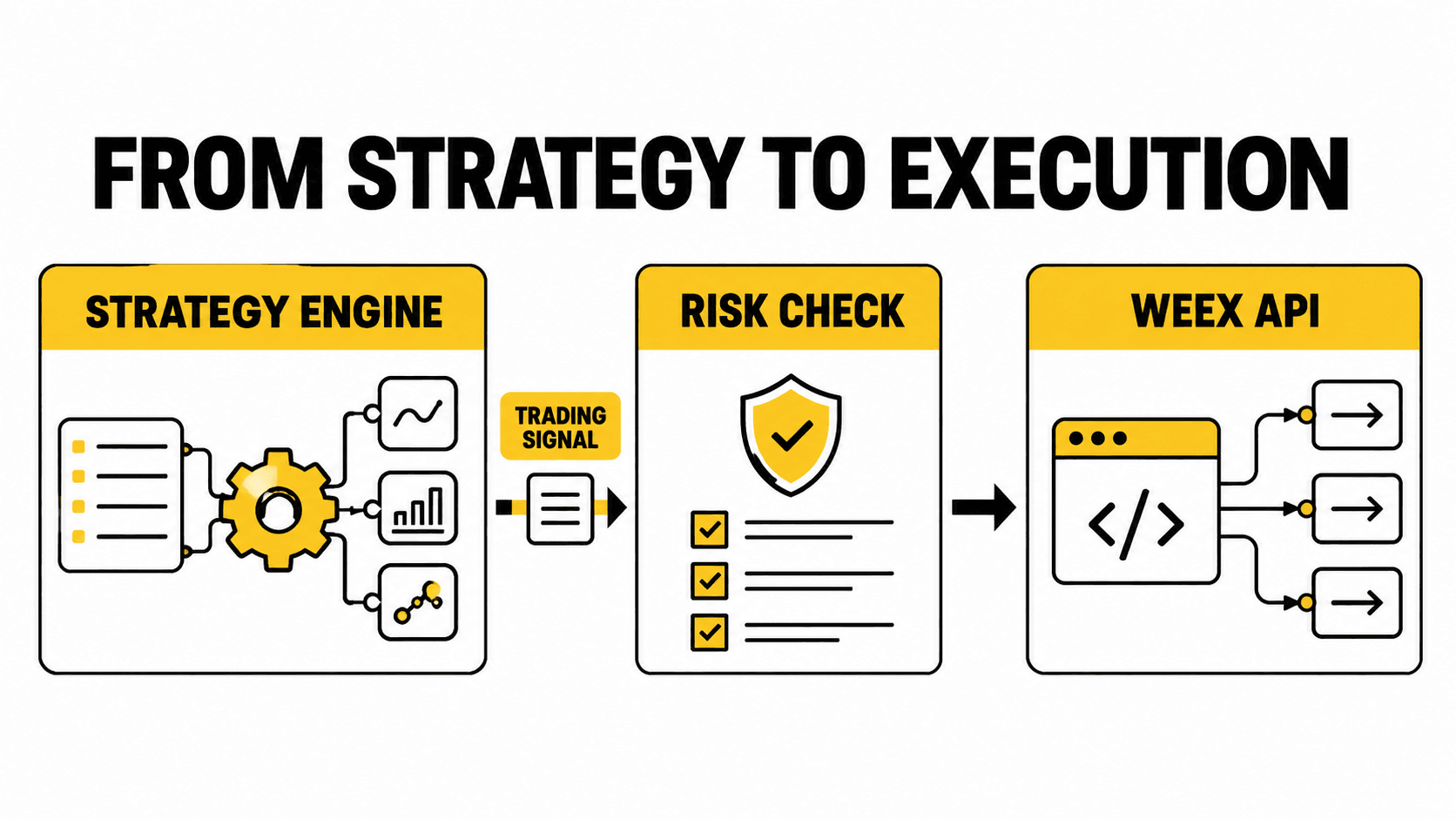
How Quant Trading Platforms and Bots Can Build With WEEX Broker

How Trading Platforms and Terminals Can Connect to WEEX Broker
How to Buy USDT in Thailand: Payment Methods, Fees and Transfer Checks

What Is RLC Crypto? How iExec (RLC) Powers Confidential Computing

What Is WEEX Fast Connect? How OAuth Connects Third-Party Trading Platforms

How to Become a WEEX Broker: Application, API Setup and Go-Live
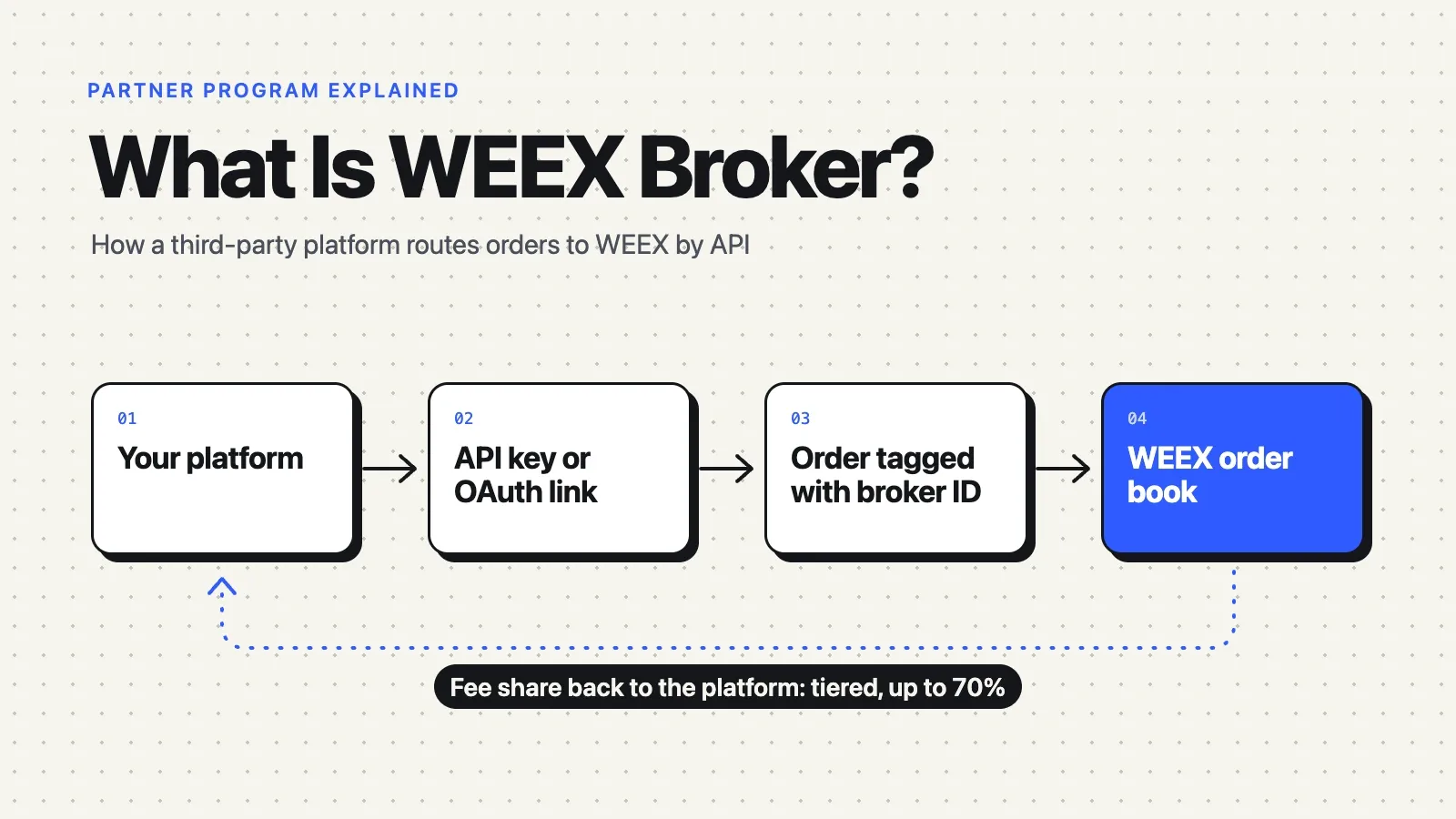
What Is WEEX Broker? API Program, Commissions and How It Works
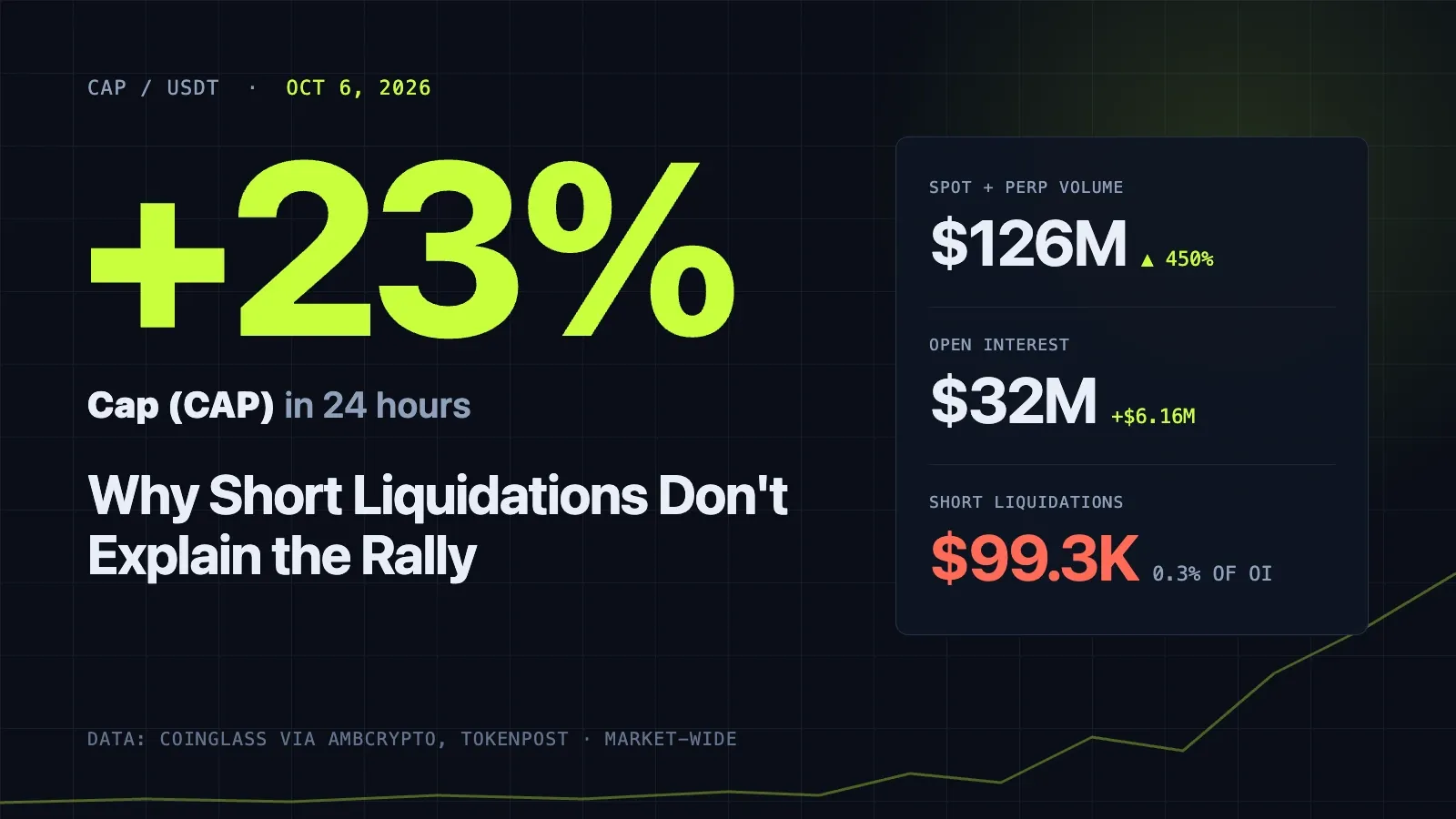
CAP Price Up 23%: Why Short Liquidations Don't Explain the Rally
What Does the Kalshi–S&P Dow Jones Deal Mean? Event Contracts vs. Index Investing
CLS Stock After Q3 Earnings: Revenue Up 83%, 2027 Outlook and What Investors Should Check
Bloom Crypto Bot Wallet Drains: What Happened and What Users Should Check
TSLA Stock After the Flying Roadster Reveal: What the Q3 Results, SpaceX Merger Talk and Analysts Say
SK Hynix Stock Before Q3 Earnings: Special Dividend Reports, HBM4 and What Investors Want to See on October 28
Exchange Convert vs DEX Swap: What’s the Difference? Try Convert Crypto On WEEX!
Contents
Popular coins
Latest articles


